Amon: Our First Child in Care
Amon was the first child welcomed into care when St. Jude Africa Children’s Foundation began supporting children in Uganda in 2019.
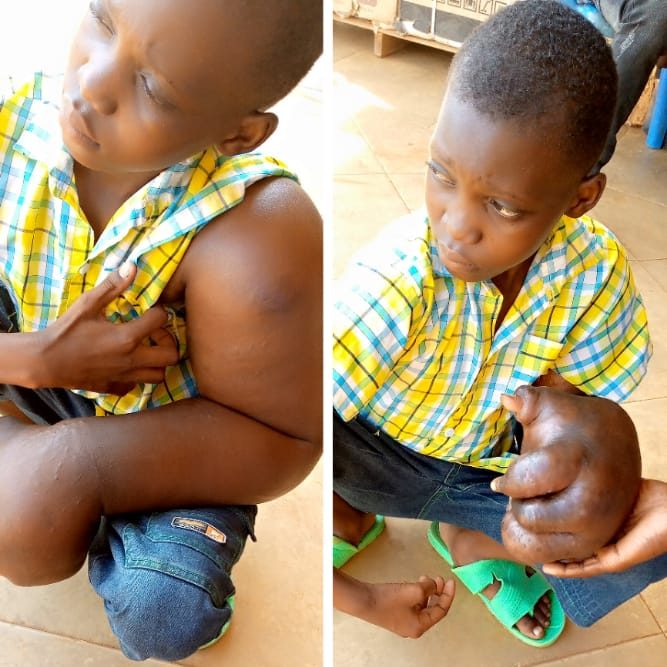
Amon’s story shows the foundation’s early commitment to urgent medical referral, hospital follow-up, and family support.
Amon’s first care assessment
When Amon first came into the foundation’s care, he needed urgent medical attention for a serious condition affecting his left arm and hand. The St. Jude Africa team assessed the situation, worked with his mother, and helped arrange transport to Mulago National Referral Hospital for specialized care.
Amon was admitted at Mulago, where he received treatment and care for about one month. During that period, the foundation continued visiting and following up so his mother was not carrying the process alone.
Amon was helped to reach specialized care at Mulago National Referral Hospital.
The team visited during treatment and remained connected to the family during admission.
Food, bedding, and family assistance helped the transition back home.
Hospital care and family support
By the time Amon was discharged, the condition in his arm had improved and he was able to return home with less pain and swelling. The foundation also provided food items, bedding, and direct family support to help his mother manage daily needs after discharge.
This early care model continues to guide St. Jude Africa today: identify a child’s need, connect the family to medical care, stay close during treatment, and support the home environment after discharge.
What happened after care
After Amon returned home to Bugiri District, the foundation planned continued follow-up. Later visits found that the family had moved, and the phone contact no longer worked, making ongoing follow-up difficult.
Even with that uncertainty, Amon’s story remains important. It marks the beginning of a care pathway that later supported children such as Ryan, Mariam, and other children listed in the 2022 end-of-year report.
Help care reach children when families need support.
Donate Direct lets you choose a one-time or monthly gift before secure payment. Bank and mobile money options are also listed for donors who cannot use cards.